
🐄 Important Oral Medications for Cattle: A Comprehensive Guide
Maintaining the health of cattle is crucial for successful dairy and livestock farming. Oral medications play a vital role in preventing, managing, and treating various conditions that cattle face throughout their life cycle. This guide provides an overview of essential oral medications used in cattle, categorized by type and purpose.
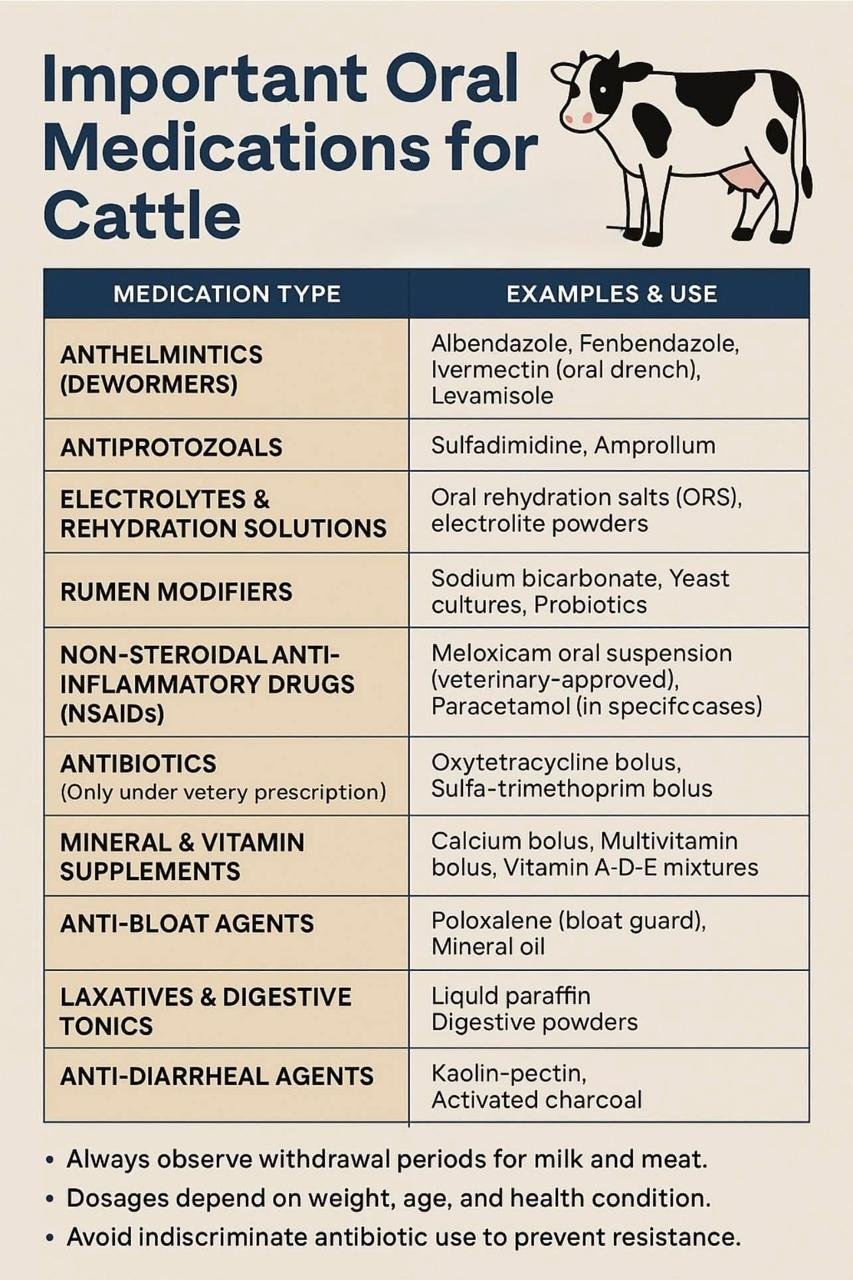
1. Anthelmintics (Dewormers)
These drugs are used to eliminate internal parasites such as worms, which can hinder growth, reproduction, and milk production.
Common examples:
• Albendazole
• Fenbendazole
• Ivermectin (oral drench)
• Levamisole
✅ Used regularly to maintain gut health and improve feed efficiency.
2. Antiprotozoals
These are used to treat protozoan infections like coccidiosis in cattle.
Common examples:
• Sulfadimidine
• Amprollum
✅ Help in preventing diarrhea, weight loss, and mortality in calves.
3. Electrolytes & Rehydration Solutions
Essential in cases of dehydration due to diarrhea, heat stress, or illness.
Common examples:
• Oral Rehydration Salts (ORS)
• Electrolyte powders
✅ Restore fluid balance, energy, and essential minerals.
4. Rumen Modifiers
Used to improve rumen function and digestion, especially after digestive disturbances.
Common examples:
• Sodium bicarbonate
• Yeast cultures
• Probiotics
✅ Enhance digestion, reduce acidosis, and improve feed conversion.
5. Non-Steroidal Anti-Inflammatory Drugs (NSAIDs)
These are used to relieve pain, fever, and inflammation.
Common examples:
• Meloxicam oral suspension (veterinary-approved)
• Paracetamol (used only in specific veterinary-approved cases)
✅ Important for recovery from mastitis, injuries, or infections.
6. Antibiotics (Only under veterinary prescription)
Used to treat bacterial infections. Use responsibly to avoid antibiotic resistance.
Common examples:
• Oxytetracycline bolus
• Sulfa-trimethoprim bolus
⚠ Always follow the vet’s advice and observe withdrawal periods.
7. Mineral & Vitamin Supplements
Supplement essential nutrients to maintain health and productivity.
Common examples:
• Calcium bolus
• Multivitamin bolus
• Vitamin A-D-E mixtures
✅ Support bone health, immunity, reproduction, and milk yield.
8. Anti-Bloat Agents
Used to treat and prevent bloating in cattle caused by gas buildup in the rumen.
Common examples:
• Poloxalene (bloat guard)
• Mineral oil
✅ Essential for emergency use in grazing animals.
9. Laxatives & Digestive Tonics
Used to relieve constipation and improve digestion.
Common examples:
• Liquid paraffin
• Digestive powders
✅ Restore normal bowel movement and improve appetite.
10. Anti-Diarrheal Agents
Help control diarrhea and related gut issues, especially in young calves.
Common examples:
• Kaolin-pectin
• Activated charcoal
✅ Bind toxins and protect the intestinal lining.
🔍 Best Practices for Using Oral Medications
• 🕒 Always observe withdrawal periods for milk and meat to avoid contamination.
• ⚖ Dosages must be based on weight, age, and health status of the animal.
• 🚫 Avoid indiscriminate use of antibiotics to prevent the development of resistance.
📝 Final Note:
Proper use of oral medications is a cornerstone of preventive veterinary care. Always consult a qualified veterinarian before starting any medication regimen. With correct use, these oral treatments can drastically improve cattle productivity, health, and welfare.







Contact Us