
🐱 Diabetes in Cats – Understanding the Condition
Diabetes mellitus is a growing concern not only in humans but also in our feline companions. It is estimated that up to 2% of cats may suffer from this chronic condition. Early awareness and proper management are crucial for maintaining your cat’s health and quality of life.
🔍 What Is Diabetes in Cats?
Diabetes in cats is a metabolic disorder that occurs when the body fails to produce enough insulin or cannot effectively use the insulin it produces. Insulin is a hormone essential for regulating blood sugar levels. When it is deficient or the body becomes resistant to it, glucose builds up in the bloodstream instead of being used by the cells for energy.
This leads to various health complications and requires prompt diagnosis and treatment.
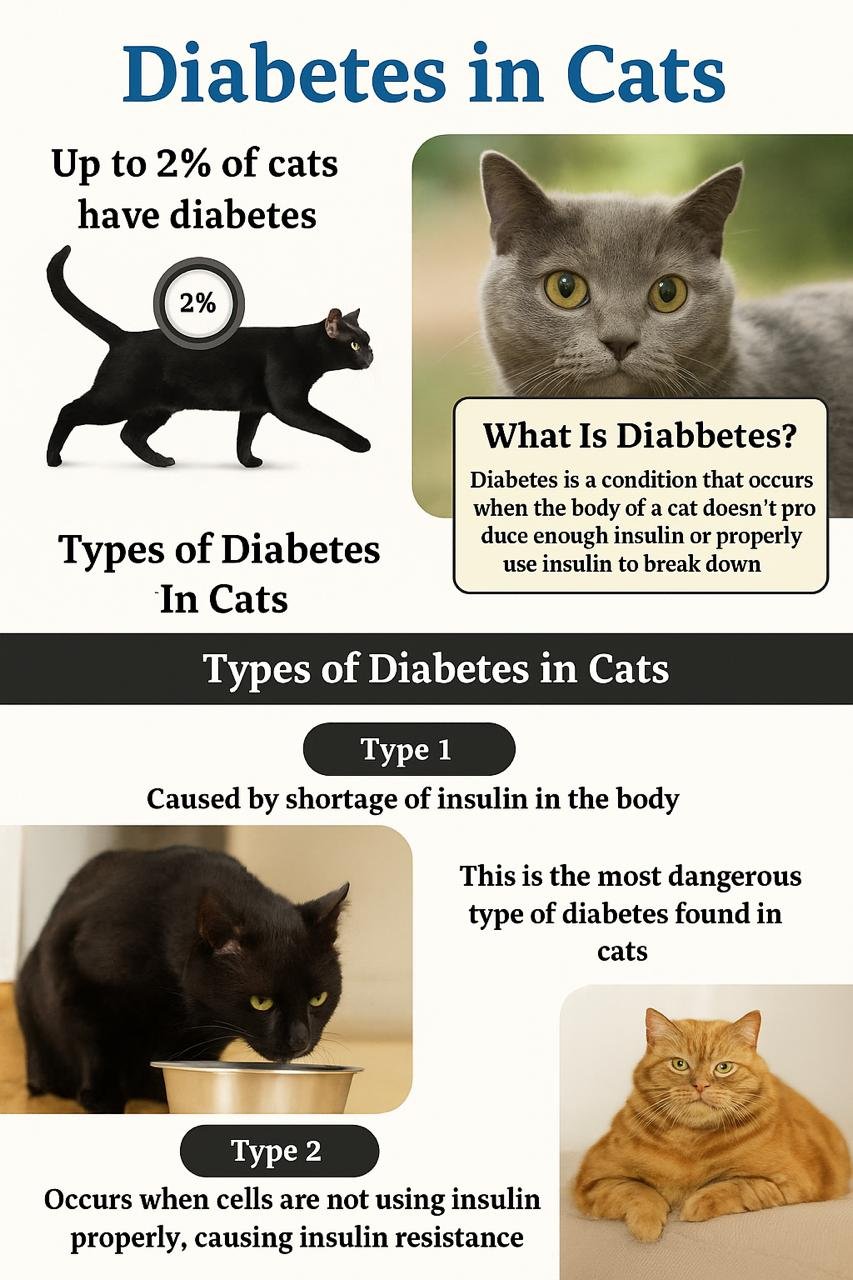
🧬 Types of Diabetes in Cats
There are two primary types of diabetes found in cats:
🟥 Type 1 Diabetes (Insulin-Dependent)
• Caused by a shortage of insulin production in the body.
• The pancreas either produces little to no insulin.
• This type is less common but more dangerous, as it requires daily insulin injections for life.
• It can occur suddenly and needs immediate medical attention.
🟧 Type 2 Diabetes (Non-Insulin-Dependent)
• Occurs when the cells in a cat’s body become resistant to insulin.
• Even though insulin is present, the body cannot use it properly.
• Most common in obese and older cats.
• With early diagnosis, weight control, and diet, some cats may go into remission.
📌 Symptoms to Watch For
• Excessive thirst and urination
• Increased appetite
• Weight loss despite eating well
• Lethargy or weakness
• Unkempt fur coat
If you observe any of these signs, consult a veterinarian for testing.
🥼 Treatment & Management
Treatment depends on the type and severity of diabetes. Common strategies include:
• Insulin therapy (especially in Type 1 cases)
• Dietary changes (high-protein, low-carbohydrate diets)
• Weight management
• Regular blood sugar monitoring
With proper care, diabetic cats can live happy and healthy lives.
❤ Final Thoughts
While feline diabetes can be a serious condition, early diagnosis and proper management can make a significant difference. If your cat shows any symptoms or is at high risk (obesity, age, genetics), regular checkups and preventive care are key.
Always consult your veterinarian for personalized advice.







Contact Us