
What is Silage?
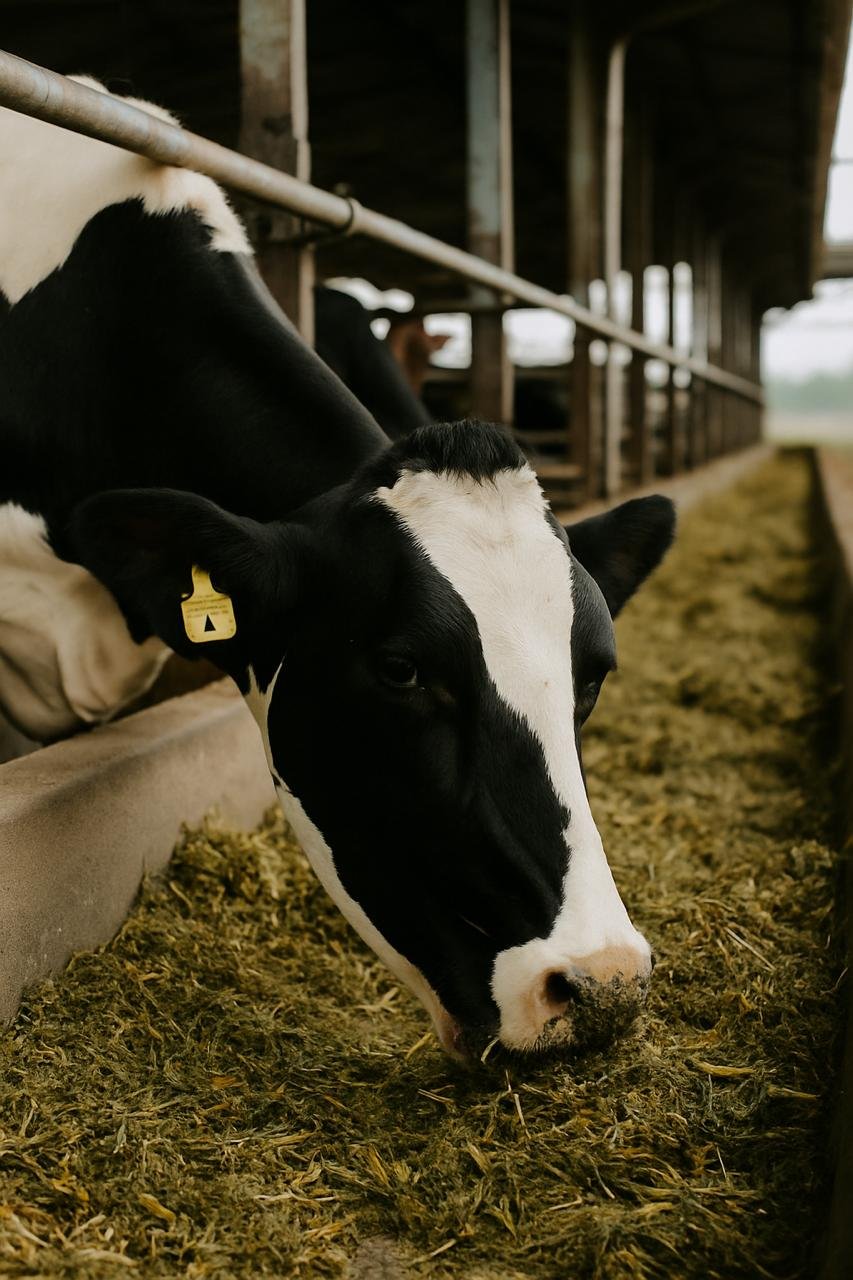
Silage is a type of preserved green fodder made from crops like maize, sorghum, or grass that are rich in moisture and carbohydrates. It is produced through a process called ensiling, where the fodder is cut, packed tightly in silos or pits, and fermented in the absence of air.
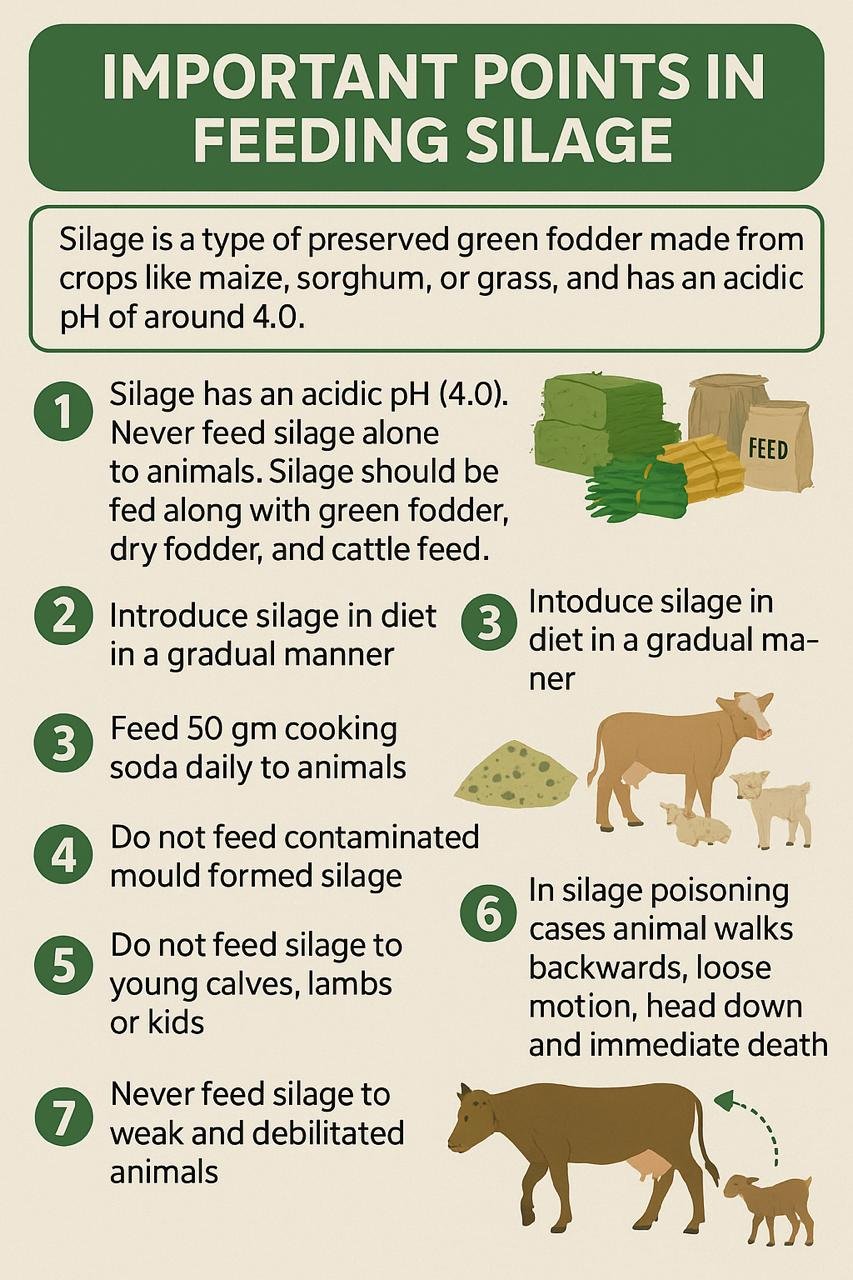
This fermentation creates lactic acid, which preserves the fodder by lowering its pH to around 4.0, preventing spoilage and microbial growth. Silage is an excellent source of energy for livestock, especially during dry seasons when green fodder is scarce.
✅ Important Guidelines for Feeding Silage to Animals
Though silage is a highly nutritious and valuable fodder, improper use can harm animals. Below are key points to remember:
1️⃣ Silage is Acidic (pH ~4.0)
• Never feed silage alone.
• Always mix with green fodder, dry fodder, and cattle feed to balance the diet.
2️⃣ Gradual Introduction
• Introduce silage slowly into the animal’s diet.
• Sudden feeding can upset digestion.
3️⃣ Add Baking Soda
• Mix 50 grams of cooking soda (baking soda) daily in the feed to neutralize acidity and prevent acidosis.
4️⃣ Avoid Moldy Silage
• Never feed silage that is moldy, spoiled, or contaminated, as it may lead to serious health issues.
5️⃣ Not for Young Animals
• Do NOT feed silage to:
• Young calves
• Lambs
• Kids (baby goats)
Their digestive systems are too delicate for fermented feed.
6️⃣ Signs of Silage Poisoning
In case of silage poisoning, animals may show symptoms like:
• Walking backwards
• Diarrhea (loose motion)
• Head down posture
• In severe cases: sudden death
7️⃣ Avoid for Weak Animals
• Do not feed silage to weak, sick, or debilitated animals. Their bodies may not tolerate the acidic nature of silage.







Contact Us