
🐐 Commercial Goat Farming Using Stall-Feeding Method – A Complete Guide for Profitable Goat Rearing
With increasing land constraints and rising demand for goat products like meat, milk, and manure, modern farmers are shifting from traditional grazing-based rearing to stall-fed goat farming (also known as zero-grazing or intensive goat farming). This method not only saves space and labor but also ensures faster growth, better disease control, and higher profits.
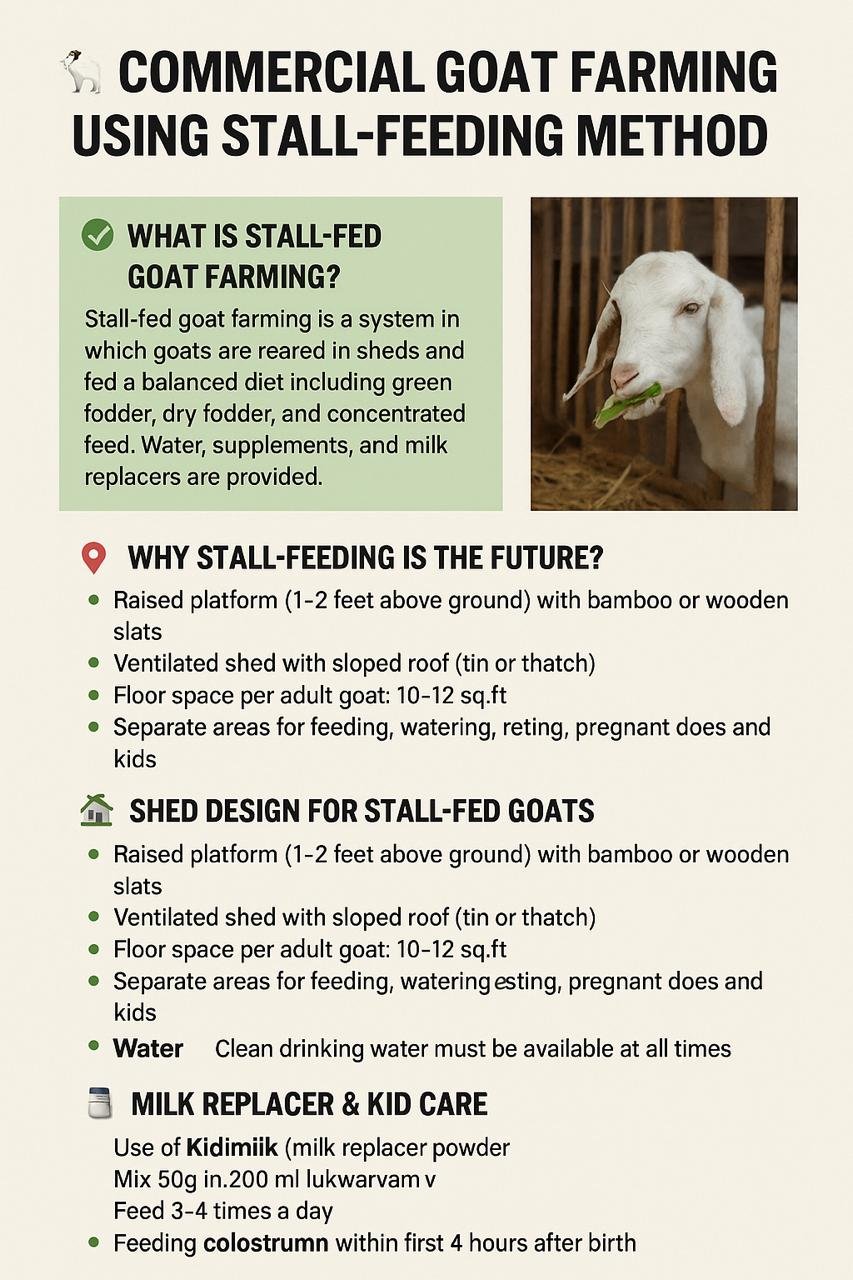
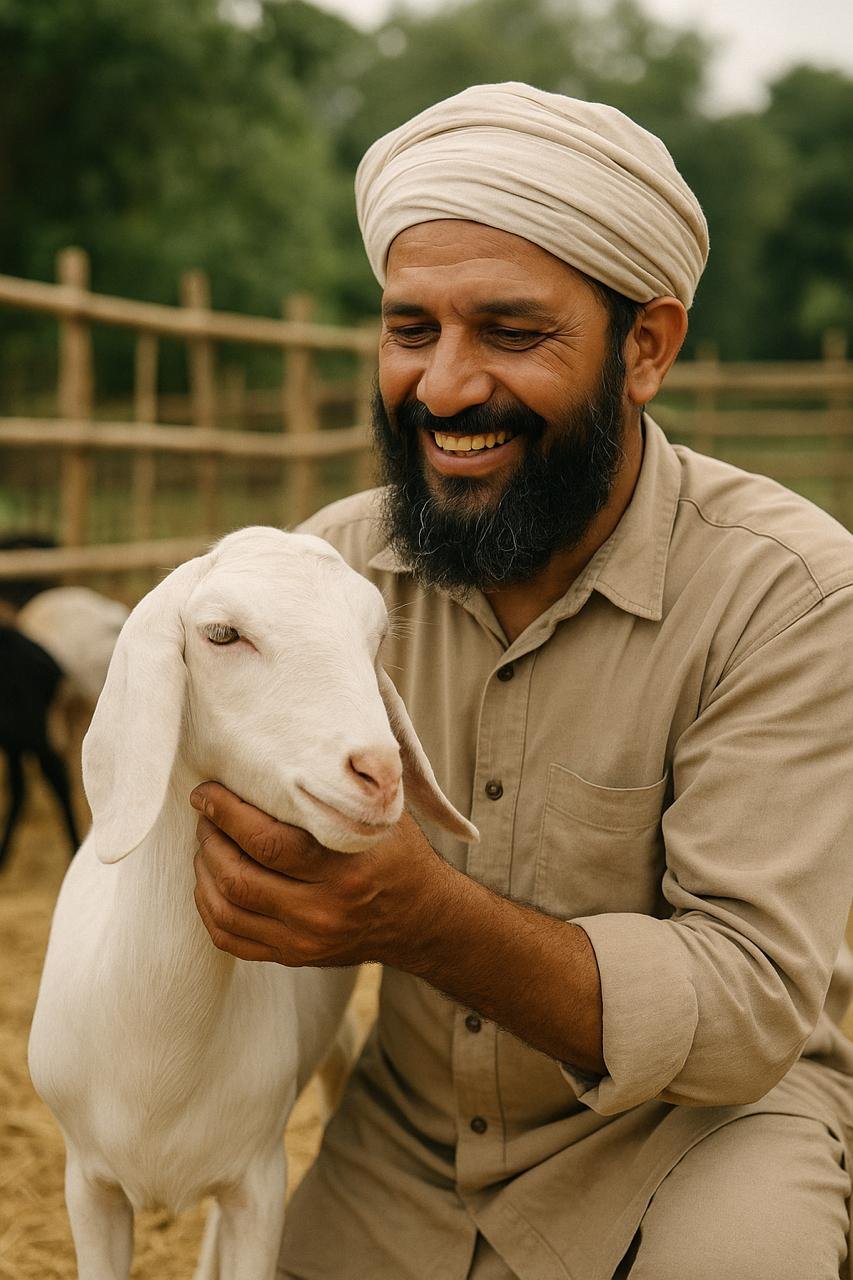
✅ What is Stall-Fed Goat Farming?
Stall-fed goat farming is a system in which goats are reared in sheds and fed a balanced diet including green fodder, dry fodder, and concentrated feed, without allowing them to graze in open fields. All essential needs like fresh water, supplements, and milk replacers are provided within the housing system.
📌 Why Stall-Feeding is the Future?
• 🌱 Grazing lands are reducing due to urbanization and land division.
• 🏡 This system can be practiced in urban, semi-urban, and small farms.
• 📈 Provides better growth rates, higher returns, and scientific management.
• 🐐 Suitable for both meat and milk production.
• 💰 Ensures year-round production and income.
🏡 Shed Design for Stall-Fed Goats
Proper housing is the base of success in this method.
• Raised platform (1–2 feet above ground) with bamboo or wooden slats
• Ventilated shed with sloped roof (tin or thatch)
• Floor space per adult goat: 10–12 sq.ft
• Separate areas for:
• Feeding
• Watering
• Resting
• Pregnant does and kids
⸻
🥗 Feeding Management in Stall-Fed Goat Farming
A scientific feeding plan is the heart of stall-fed goat farming.
1. Green Fodder
• Napier grass, Berseem, Lucerne, Subabul, Maize
• Provide 3–4 kg per goat/day
2. Dry Fodder
• Wheat straw, Paddy straw, Groundnut haulms
• Provide 1–2 kg per goat/day
3. Concentrate Feed
• Maize, Soybean meal, Bran, Mineral mixture
• Give 200–400g per adult goat/day depending on weight and stage (pregnant, lactating)
4. Water
• Clean drinking water must be available at all times
• Change water twice daily
⸻
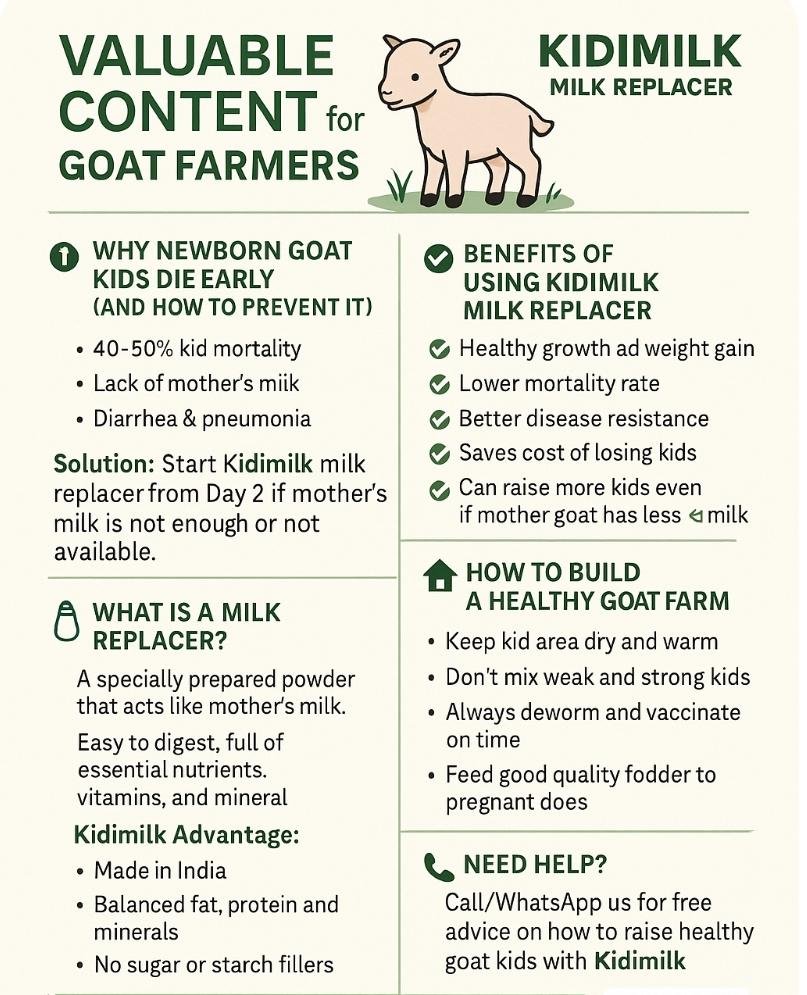
🍼 Milk Replacer & Kid Care(kidimilk)
For orphaned kids or when the mother’s milk is insufficient:
• Use Kidimilk (milk replacer powder)
• Mix 50g in 200ml lukewarm water
• Feed 3–4 times a day
• Always feed colostrum within first 4 hours after birth
💉 Health & Vaccination in Intensive Farming
Since stall-fed goats live close together, disease prevention is crucial.
• Regular deworming (every 3 months)
• Vaccinations:
• PPR – 3 months age, yearly
• ET – 2 months, every 6 months
• FMD – 4 months, every 6 months
• HS & BQ – 6 months, yearly
• Foot trimming, spraying for ticks/lice every month
📈 Quick Growth with Stall-Feeding
• Goats gain weight faster due to constant nutrition.
• Lactating goats produce more milk when fed balanced diet.
• Kidding rate increases with better fertility and health.
• Easy monitoring of breeding, feeding, and health records.
🔚 Conclusion
Commercial goat farming using the stall-feeding method is not only space-saving and manageable but also gives better returns in shorter time. As grazing land becomes scarce, this system is proving to be the most efficient and scalable way forward for small, medium, and large goat farms.
By adopting modern nutrition, regular veterinary care, and best management practices, goat farmers can unlock maximum profit per animal.







Contact Us