
🐐 How to Take Care of Kid Goats After the Death of Their Mother
The sudden loss of a mother goat (doe) can be heartbreaking — not just for the farmer, but also for the newborn or young kids who depend on her for warmth, care, and especially milk. If a mother goat dies, it’s essential to step in immediately to give her kids the best chance at survival and healthy development.
🍼 1. Provide Warmth Immediately
Newborn kid goats cannot regulate their body temperature, especially if born during cold weather.
Steps to provide warmth:
• Dry them with a clean towel immediately if they are still wet.
• Use a heat lamp or warm room to keep them at 35–38°C (95–100°F).
• Use blankets or jackets specially designed for small animals if needed.
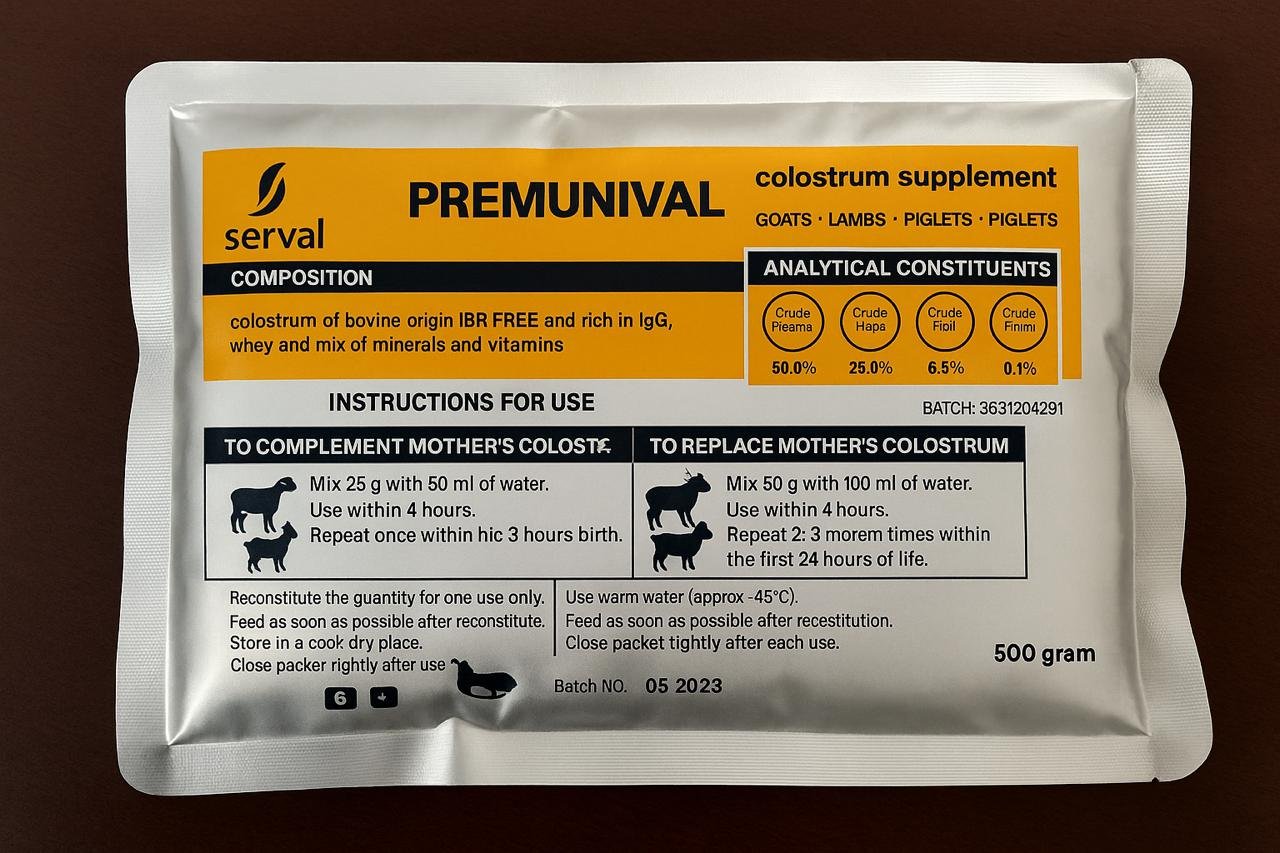
🍼 2. Colostrum is Critical (PREMUNIVAL) (First 24 Hours)
Colostrum (the first milk from the mother) contains vital antibodies that protect against disease.
If the mother has died before feeding:
• Use stored frozen colostrum (goat, cow, or commercial powder).
• Feed within the first 2 hours of birth for best immunity.
• Quantity: ~10% of body weight in the first 24 hours, divided into 3–4 feedings.
🍼 3. Milk Replacer Feeding (Kidimilk)
After 24 hours, switch to a milk replacer. Kidimilk are specially designed formulas for kid goats and are ideal when mother’s milk is unavailable.
Feeding schedule:
Age
Amount per feeding
Feedings/day
1–2 weeks
250–300 ml
4
3–4 weeks
350–400 ml
3
5–8 weeks
400–500 ml
2–3
Important Tips:
• Use warm water (~40°C) to mix powder.
• Always clean feeding bottles to avoid infection.
• Don’t overfeed – it can cause bloat or scours (diarrhea).
4. Introduce Solid Feed Gradually
Start introducing dry feed and hay from 2 weeks of age to help develop their rumen (stomach system).
Good starter feed includes:
• Creep feed with 16–18% protein
• Fresh alfalfa or good quality dry hay
• Clean drinking water at all times
⸻
💉 5. Health Care & Vaccinations
Without their mother’s immunity, orphan kids are more vulnerable to infections.
Checklist:
• Navel care: Dip umbilical cord in iodine after birth.
• Scours (diarrhea): Monitor stool; adjust milk intake if needed.
• Vaccinations: CD&T (Clostridium perfringens types C and D + Tetanus) at 4–6 weeks.
• Deworming: Begin at 6–8 weeks, then as needed.
⸻
❤ 6. Social & Emotional Care
Kid goats are social animals. Orphaned kids need:
• Gentle handling to reduce stress
• A companion – another kid or even a gentle adult goat
• Toys or safe space to play and explore
⸻
What is colostrum
colostrum is the thick , creamy liquid collected during the first miliking from the mother after the birth of her new born. only colostrum contains a sufficient level of antibodies to protect the newborn. the milk collected during subsequent milking has a much lowe level of antibodies.
Raising orphaned kid goats can be challenging, but also deeply rewarding. With the right milk replacer like Pigimilk or Kidimilk, warmth, clean feeding, and basic healthcare, you can give these vulnerable animals a healthy start in life. Whether you’re a small farmer or a passionate animal lover, your care can make all the difference.







Contact Us